He's a target of the Republican Party establishment, too. They are in the process of writing his district out of existence.
Monday, January 30, 2012


Friday, January 27, 2012
Thirty Years Ago

Sir Winston Churchill
This is a montage of Sir Winston Churchill's funeral with brief snippets of his life. The music is a British hymn, I Vow to Thee My Country.
Sunday, January 22, 2012
Alfred Lord Tennyson and The Charge of the Light Brigade
| Alfred Lord Tennyson |
What is so captivating about this poem is that it describes
an event that really happened. The
Charge of the Light Brigade was an instance of history, taken from the accounts
of the Crimean War. The story is just as
gripping in historical accounts which by their nature concern themselves with
facts and not with artistic devices like meter and rhyme. Tennyson took the bald historical facts and
actually weights them with meter and rhyme and produced, in less than 300
words, nearly as complete an account of the battle as any historian.
I think that what so grips the reader is not so much Tennyson’s
skill with words, especially not his employment of rhyme and meter and so
forth, but that the story the poem relates is so fascinating to men and women
who, though familiar with war, have never seen actual combat; who, though
cognizant of the concept of bravery and courage under fire, have never
witnessed actual courage in the life and death struggle that is combat; who,
though fully appreciative of how bad an effect poor leadership or an untimely
mistake can have on an army, nevertheless have never seen that effect played
out before their very eyes. Through
Tennyson’s poem, they are almost able to do and to see these things.
The poem is so arresting because it tells of a disaster that
never should have happened—that, really, wasn’t even possible; for Britain was
the world’s superpower. But this little
skirmish with the Ottomans on the Crimean peninsula was the British equivalent
of our Korean and Vietnam wars rolled into one.
Upon hearing the news of the battle, all of Britain was set to
wondering, ‘What does this mean for the empire.’ Tennyson’s poem captured the spirit of this
sudden soul searching.
Finally, Tennyson’s poem opens a door into the terrible yet
fascinating life of a combat soldier. One
of the first things he makes clear is that it is a place called the “valley of
Death” where a soldier does his work. (Greenblatt,
1188) Then his whole second stanza
underscores what everyone knows, that the soldier must follow orders—even bad
orders. The drama opened up here is that
we can see, as the soldiers did, the catastrophe that awaits them. The reader cannot help but be gripped by the awesomeness
of the battle, which Tennyson captures in so few words, cannon to the left,
right and center, the ground echoing with the thunder of shot and shell. We see the riders rushing “Into the jaws of
Death, Into the mouth of Hell,” (Greenblatt, 1188) and we want to pull
them back. Perhaps we even scream at the
top of our mind’s voice for them to turn back.
But they are soldiers. The line
about “All the world wonder'd,” captures the essence of this fascination with
these brave men and the impossible task before them. Then, miracle of miracles, some of them
actually broke through enemy’s lines!
But their lines were “Shatter'd & sunder'd.” Ultimately, what Tennyson did with his poem
was something the newspaper accounts of the story could not do. Nor could the historians do it. Tennyson made the men heroes. You see it in the words “While horse &
hero fell, They that had fought so well,” and “When can their glory fade?”
and again with the “Noble six hundred!” (Greenblatt, 1188) He made it matter more that the men were
brave beyond brave than that Her Majesty’s mission had completely failed.
by Alfred, Lord Tennyson
(Memorializing Events in the Battle of Balaclava, October 25, 1854. Written 1854)
Half a league half a league,
Half a league onward,
All in the valley of Death
Rode the six hundred:
'Forward, the Light Brigade!
Charge for the guns' he said:
Into the valley of Death
Rode the six hundred.
'Forward, the Light Brigade!'
Was there a man dismay'd ?
Not tho' the soldier knew
Some one had blunder'd:
Theirs not to make reply,
Theirs not to reason why,
Theirs but to do & die,
Into the valley of Death
Rode the six hundred.
Cannon to right of them,
Cannon to left of them,
Cannon in front of them
Volley'd & thunder'd;
Storm'd at with shot and shell,
Boldly they rode and well,
Into the jaws of Death,
Into the mouth of Hell
Rode the six hundred.
Flash'd all their sabres bare,
Flash'd as they turn'd in air
Sabring the gunners there,
Charging an army while
All the world wonder'd:
Plunged in the battery-smoke
Right thro' the line they broke;
Cossack & Russian
Reel'd from the sabre-stroke,
Shatter'd & sunder'd.
Then they rode back, but not
Not the six hundred.
Cannon to right of them,
Cannon to left of them,
Cannon behind them
Volley'd and thunder'd;
Storm'd at with shot and shell,
While horse & hero fell,
They that had fought so well
Came thro' the jaws of Death,
Back from the mouth of Hell,
All that was left of them,
Left of six hundred.
When can their glory fade?
O the wild charge they made!
All the world wonder'd.
Honour the charge they made!
Honour the Light Brigade,
Noble six hundred!
Half a league onward,
All in the valley of Death
Rode the six hundred:
'Forward, the Light Brigade!
Charge for the guns' he said:
Into the valley of Death
Rode the six hundred.
'Forward, the Light Brigade!'
Was there a man dismay'd ?
Not tho' the soldier knew
Some one had blunder'd:
Theirs not to make reply,
Theirs not to reason why,
Theirs but to do & die,
Into the valley of Death
Rode the six hundred.
Cannon to right of them,
Cannon to left of them,
Cannon in front of them
Volley'd & thunder'd;
Storm'd at with shot and shell,
Boldly they rode and well,
Into the jaws of Death,
Into the mouth of Hell
Rode the six hundred.
Flash'd all their sabres bare,
Flash'd as they turn'd in air
Sabring the gunners there,
Charging an army while
All the world wonder'd:
Plunged in the battery-smoke
Right thro' the line they broke;
Cossack & Russian
Reel'd from the sabre-stroke,
Shatter'd & sunder'd.
Then they rode back, but not
Not the six hundred.
Cannon to right of them,
Cannon to left of them,
Cannon behind them
Volley'd and thunder'd;
Storm'd at with shot and shell,
While horse & hero fell,
They that had fought so well
Came thro' the jaws of Death,
Back from the mouth of Hell,
All that was left of them,
Left of six hundred.
When can their glory fade?
O the wild charge they made!
All the world wonder'd.
Honour the charge they made!
Honour the Light Brigade,
Noble six hundred!
Works Cited.
Greenblatt,
Stephen and M.H. Abrams. Eds. The
Norton Anthology to English Literature.
8th Ed., Vol. 2. New
York: W. W. Norton, 2006.
Gingrich on the Media
Said Gingrich, "The American people feel that they have elites who have been trying for a half century to force us to try to quit being American, and become some kind of other system."
What he has not yet articulated is that Barack Obama is the media's president, the media's creation. But that's coming. But, before that comes, he has to show that Romney, too, is a media creation.
The elite media determined the outcome of the presidential election in 2008. It was the media who chose the candidates and the media who anointed the winner. Than must not be allowed to happen again. To paraphrase Ronald Reagan slightly, in the present circumstances, the liberal media are not the solution to our problems. The media are the problem.
What he has not yet articulated is that Barack Obama is the media's president, the media's creation. But that's coming. But, before that comes, he has to show that Romney, too, is a media creation.
The elite media determined the outcome of the presidential election in 2008. It was the media who chose the candidates and the media who anointed the winner. Than must not be allowed to happen again. To paraphrase Ronald Reagan slightly, in the present circumstances, the liberal media are not the solution to our problems. The media are the problem.
Saturday, January 21, 2012
Ozymandias
 |
| The "colossal wreck" of Ozymandias |
The most amusing thing I read about Percy Shelley, son of privilege,
was when, after he had written that stupid pamphlet, The Necessity of Atheism, and had the gumption to mail it to the
bishops and higher muckety-mucks at Oxford, he “to his shock and grief” was unceremoniously
booted from the university. (Greenblatt, 741)
It showed that, even in the Romantic era, there remained plenty of
people of good character and common sense, albeit at Oxford.
Shelley, at least in his youth (he only lived 30 years), was
a loser in the mold of his contemporary, Lord Byron. Kicked out of college, he ran off with a “commoner”
and became a drifter. No job. No money.
No skill or willingness to work.
Yet he thought the world owed him something. His development of thought, as expressed through
one of his worthless poems, that “institutional religion and … morality” were
the “roots of social evil,” and that they must soon “wither away and humanity
will return to its natural condition of goodness and felicity” revealed him to
be quite insane. (Greenblatt, 742)
The episode with Harriet, his wife whom he was tired of, and
Mary Wollstonecraft’s daughter, whom he ran off with, and that girl’s
stepsister … inviting his estranged wife, Harriet to come and live with them,
revealed him to be … not exactly the kind of guy you’d want your daughter to
bring home for dinner.
Shelley the poet “almost entirely lacked an audience.”
(Greenblatt, 742) This demonstrated that, in the Romantic period, good character and common sense was not limited to the faculty at Oxford. It was something the lower and middle classes possessed in great quantity. To gain his audience, Shelley was forced to sojourn in Italy.
The most interesting thing I read about Percy Shelley, son
of privilege, was his poem about Ozymandias.
I learned that Ozymandias is the Greek name for the famous Egyptian king
(pharaoh) Ramses II. I took the poem as
somewhat autobiographical. It was about
a man who thought very highly of himself, calling himself “king of kings.” But the only evidence of support for that conceit
was “two vast and trunkless legs of stone in the desart,” a “shattered visage”
still maintaining its “sneer of cold command,” and the words etched on a pedestal,
“I am Ozymandias, King of Kings.”
Shelley described this sight as others might have described his life and
work, as a “colossal wreck.” (Greenblatt, 768).
And, it was short.
Works Cited.
Greenblatt, Stephen
and M.H. Abrams. Eds. TheNorton Anthology to English Literature. 8th Ed., Vol. 2. New
York: W. W. Norton, 2006.
Thursday, January 19, 2012
My Favorite Cartoon Strips
These are the ones I read every day.
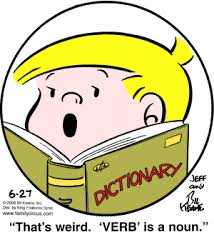
Family Circus
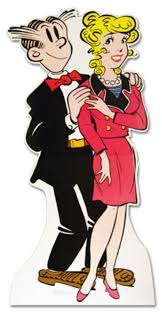
Blondie
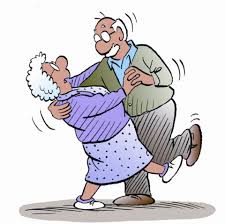
Pickles
Dilbert
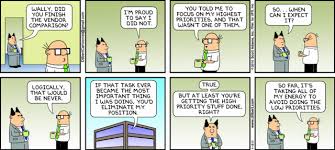
Wally is my inspiration.
Dustin

The best ones usually depict Dustin's father. He's cool.
Hi and Lois

Hi's alright.
The Lockhorns
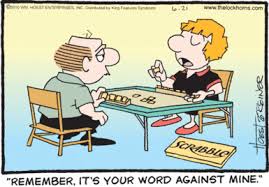
Sometimes we cut these out and post them on the fridge.
Family Circus
Blondie
Pickles
Dilbert
Wally is my inspiration.
Dustin
The best ones usually depict Dustin's father. He's cool.
Hi and Lois
Hi's alright.
The Lockhorns
Sometimes we cut these out and post them on the fridge.
Subscribe to:
Posts (Atom)